Carmel Green Teen Micro-Grant Program
  • HOME
  • About Us
    • Overview
    • In the News
    • Awards
    • Meet Our Board
    • Annual Reports
    • Contact Us
  • Application
    • Criteria
  • Project Ideas
  • Funded Projects
    • 2021 Projects
    • 2020 Projects
    • 2019 Projects
    • 2018 Projects >
      • Helping Ninjas Help Pollinators
      • Helping Ninjas Help Garden and Compost
      • This is NOT a Plastic Bag
    • 2017 Projects >
      • UHS Bat Boxes
      • Don'f Flip It, Save It! - Water Bottles
      • River Road Habitat Restoration
    • 2016 Projects >
      • It's in the Reusable Bag
      • Plots to Plates Gardens Tour
      • Millbrook Nature Trail
      • UHS Poultry Project
      • Green Cubs Tree Planting
      • OLMC Tree Replacement
      • Woodbrook Butterfly Garden
      • Turn Up for Compost
    • 2015 Projects >
      • OPE Recycling Cubs
      • Goodbye Plastics 2
      • UHS Monarch Waystation
      • UHS Hydration Station
      • CHS Earth Fair
      • CHS NHS Event Recycling
    • 2014 Projects >
      • Girl Scout Teaches Conservation
      • Carmel Pollinator Garden
      • Trees For Future Generations
      • CHS TEDx Conference
      • UHS Campus Green Up
    • 2013 Projects >
      • CHS Teaches Conservation
      • Bug Repellent Daisies
      • Kids Against Crayon Waste- Crayon Recycling
      • UHS Community Garden
      • A Greener College Wood
      • Do Something Trees
      • No Crayon Left Behind
      • Prairie Trace Trees
      • Goodbye Plastics
      • Carmel Green Trees
      • CHS Recycled Arts Garden
      • Going Green at the CLC
    • 2012 Projects >
      • UHS Tree Hugging Trailblazers
      • Girl Scouts Bikeyard 100
      • Bat Boxes- Nature's Bug Zappers
      • CHS Green Shower Power
    • 2011 Projects >
      • Mission Recycle
      • Reduce, Reuse, Recycle
      • Recycling at CHS
      • A Greener Tomorrow is in the Bag
      • Fishing Line Recycling
    • 2010 Projects >
      • MOSAICS Family Garden
      • Coolers are Cooler with Cups
      • Ban the Bottle, Try the Tap
      • Butterfly Reintroduction Carey Grove Park
      • Butterfly Reintroduction Clay Middle School
      • Tree Scouts
    • 2009 Projects >
      • River Trail Wildflower Reintroduction
      • Scouts' Reusable Shopping Bags
      • St. Christopher's Garden
      • Earth Day Tree Seedling Giveaway
      • CHS Green Lights Club
  • Impact
  • Ceremonies
    • 2018 Award Ceremony
    • 2017 Award Ceremony
    • 2016 Award Ceremony
    • 2015 Award Ceremony
    • 2014 Award Ceremony
    • 2013 Award Ceremony
    • 2012 Award Ceremony
    • 2011 Award Ceremony
    • 2010 Award Ceremony
    • 2009 Award Ceremony

Project Ideas

Want to do a green project, but don't know what to do?
Here are some ideas that you can make your own.

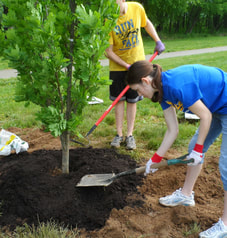
Plant trees
Picture
Trees:
  • Filter pollution from the air
  • Help recycle water
  • Prevent soil loss
  • Create shade
  • Give shelter from wind and rain
  • Provide homes for animals
  • Make food for humans and wildlife
  • Provide an interesting, soothing, learning 
    environment for children and your community
Obtain necessary permission to plant trees in locations beneficial to the community.  Research which trees to plant and how to do so effectively. Educate others about the many  benefits of trees.

Teach Others
Picture
Create an Educational Program to Promote a Sustainable Lifestyle Do you have a message about environmental stewardship that would promote change in your school or community?  Create a detailed plan describing how you would promote and implement your educational plan.
  • Promote Waste-Free Lunches at your school. Whether the majority of students brings lunch from home or buys it at school, there’s almost always room for improvement. A waste-free lunch program is a process of educating students, parents, and school staff about where our trash ends up and how we, as individuals, can reduce the amount of trash we generate.
  • Do you know that Vampire Energy is draining wallets across the nation? Vampire Energy is energy waste that comes from everyday appliances, like your TV, VCR, microwave, phone charger, computer monitor, etc., even while they’re not in use. “Vampire Energy Loss” from appliances in standby mode, e.g., the clock on your microwave or a screensaver on your PC monitor, costs over $10/year. A plasma TV that runs in standby mode an cost a whopping $160.00/year! Multiply each of these items by 79,000 Carmel residents, and you have a lot of wasted money and energy, PLUS all that pollution created to make the wasted energy. With vampire popularity at an all-time high, promote a creative educational program to make people aware of this problem, and ask for pledges for modified behavior.
  • An innovative community artist named Tattfoo created the Sustainable Organic Steward (SOS) Pledge that is free for other groups to use and promote. Perhaps this could be part of your educational program.
  • Think air, land, and water. What can you do to teach water conservation or combat water, land or air pollution?

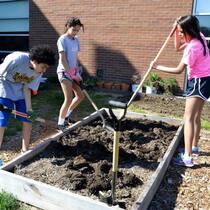
Create an Organic Community or School Garden
Picture

 Organic community gardens:
  • Allow families and individuals without land of their own the opportunity to produce food
  • Conserve resources by shortening the commodity chain, saving on fuel-demanding transportation and packaging
  • Promote use of non-toxic pesticides and fertilizers
  • Create sense of community

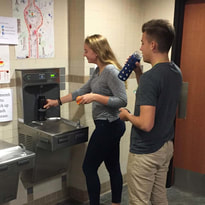
Promote Alternatives to Disposable Plastic Water Bottles at your School or Sports Club
Picture
 Disposable Plastic Water Bottles:
  • Take energy and oil to produce and transport
  • Take up space in landfills
  • Contain water that is tested for quality less often than tap water
  • Are recycled less than 20% of the time
Bottled Water:
  • Is thousands of times more expensive than tap water
  • Is often just tap water in a bottle
Might your school or non-profit athletic organization be interested in installing a Water Bottle Refilling Station to encourage reusable water bottle usage? Stations are designed to calculate and let users know how many disposable plastic water bottles are kept out landfills in real time as each reusable bottle is filled.

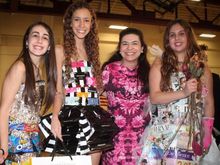
Organize a “Trashion Show” or Art Display in a Campaign to Discourage Waste
Picture
Who says that teaching lifelong habits for a sustainable lifestyle can’t be fun? Consider art for social change in order to inspire individuals toward mindful consumption, creative re-use and conscientious disposal.

What’s Trashion? Just like it sounds, trashion is a combination of trash and fashion. Participants create and model wearable garments made of clean, usable discarded items, like Project Runway with a reflective, sustainable living twist. An educational Trashion or Art Show can:
  • Captivate audiences through visually striking artwork
  • Create awareness about the impacts of our consumer and disposal habits
  • Inspire creative reuse by engaging individuals in interactive activities
  • Provide resources and alternative solutions for more sustainable habits
Educate and engage your school or community by inviting others to the Trashion Show. Websites with ideas on trashion shows are Education.com and RecycleScene.com. Remember that Carmel Green Teen selection criteria prohibit using our micro-grants for fundraising purposes.

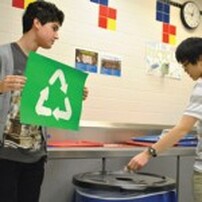
Educate Others as to What Can and Cannot be Recycled
Picture
How many Carmel residents wonder, “Can THIS item go into the recycle bin, or is it trash?”
  • Now that the city of Carmel provides curbside residential recycling service, perhaps it would benefit the community to work with Republic Services and Carmel Utilities to hold events to better educate the public regarding exactly what can go in those totes
  • Carmel Clay Schools use Ray’s Trash Service, so school groups could work with this company to educate students as to what is recyclable at school
  • If permitted, field trips to the recycling facilities could be arranged
  • Educational posters and announcements could be displayed
  • Brainstorm and think of other ways to promote proper recycling – Video? Video Contest? Play? Other?

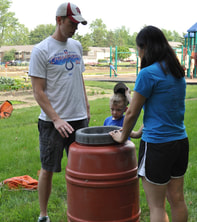
Host a Rain Barrel-Making Workshop – Don’t just install one, teach others
Picture

Rain barrels:
  • Reduce consumption of city water and thus help conserve the water supply and save money
  • Help slow the flow of storm-water run-off into the city’s sewer system
  • Increase mindfulness to cycles of rain fall and water usage


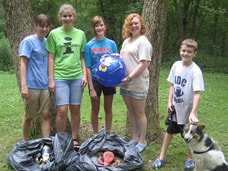
Host a Clean-up Event to Remove Trash alongside the Monon Trail or other safe location 
Picture
Clean-ups:
  • Reduce pollution and provide civic pride
  • Offer a healthier environment for animals
  • Create a sense of community
  • Help establish an area that is nicer to view
Each year volunteers help remove trash from the White River.  See http://www.friendsofwhiteriver.org/ for details on how they organize their clean-up event. How can you reach out to others in the community to reduce this trash?

Promote use of energy saving light bulbs, Wind Energy, or Solar Energy
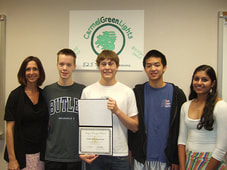
Picture
  • Conduct studies analyzing energy saved vs. cost
  • Take a look at products such as the Kill-a-watt to analyze costs and energy use
  • Share studies with public
  • Science Fair, Environmental Club, Student Council, & Eagle Scout projects welcome

Promote Reducing, Reusing, or Recycling at your School, Church, or Sports Club
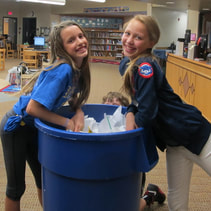
Picture
  • Reducing, reusing, and recycling conserves natural resources, saves energy and reduces landfill use.
  • Be creative in what can be reduced, reused, or recycled, and research the company receiving your items.
  • Did you know that the CRAYON RECYCLE PROGRAM takes unwanted, rejected, broken crayons to a better place, where they will be recycled into new crayons?
  • Can you find a local library or homeless shelter that would accept used book or magazine donations? Reuse is even better than recycling.
  • What about those catalogs you never even wanted? Not making and sending the catalogs in the first place helps the environment even more than reusing and recycling. Consider promoting the Catalog Canceling Challenge or other programs to facilitate the process of never receiving the junk mail in the first place.
  • Research the best way to reuse and donate used school supplies and hold a collection event at the end of the year.
**Please note that micro-grants are available for materials such as recycle bins and items to promote their use.   Additional and ongoing costs associated with hiring custodial staff and/or a local trash company for ongoing disposal of the recyclables is not a permitted micro-grant expense.  Proof of ability to provide these services through other means will be necessary to obtain funding for recycling bins.

Ask your School or Sports Club to adopt a “No Idle” Policy for the Carpool Line
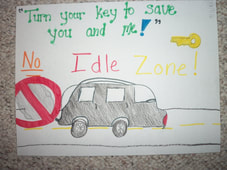
Picture
Turning off cars in the carpool line:
  • Improves the air quality in the immediate vicinity
  • Provides a healthier environment for students
  • Saves fuel and money
Currently the “Smart Schools Don’t Idle” program is being piloted at elementary schools in Marion County, implemented by Improving Kids’ Environment and the City of Indianapolis Knozone program, through a grant from the United States Environmental Protection Agency.  Youth groups interested in promoting a carpool-line “no idle” policy at their school, may work with school administration to adopt a similar plan or create their own.
See Improving Kids Environment – Smart Schools Don’t Idle Program for details.

Create a Native Perennial Plant or Pollinator Garden with signs to educate others
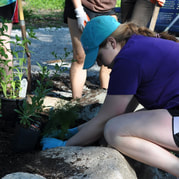
Picture
Native perennial plants die back each fall or winter but sprout and grow each spring. This means that their benefits to the public and to the environment continue year after year.

Plants native to Indiana:
  • Increase local species diversity and support native animals and pollinators
  • Have extensive roots systems that stabilize soil, absorb pollutants, and reduce erosion, runoff, and flooding
  • Are adapters to the local soil, climate, and pests which can make them easier to maintain
  • Are a variety of beautiful shapes, colors, and sizes that enhance the beauty of landscaped and natural areas while benefiting the environment
The variety of native plants means there are options for any kind of environment. Installing educational signage with your planting helps to educate the public on the benefits of natives and encourage their use elsewhere. Native plants are particularly useful in attracting threatened pollinators or can be used as part of a rain garden to improve water quality.

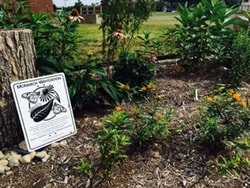
Help Restore Monarch Butterfly Habitats
Picture
Monarch butterflies are in trouble. Loss of habitat and pesticides have significantly impacted their migration to Mexico. Milkweed is the single most important plant for Monarchs. It is a major nectar source for adults and the only food source for their caterpillars and is disappearing at alarming rates along their flyways.

To help restore Monarch Populations:
  • Learn more about Monarch Butterflies and why their numbers are decreasing
  • Research and obtain permission to plant milkweed in a large public area or in neighborhood backyards
  • Educate others as to why they should care about these beautiful butterflies
  • Consider installing and maintaining a Monarch Butterfly weigh station at your school
Visit  MonarchWatch.org , where free milkweed plant starts and educational information is available.

Create your own idea – Think Green! 
Picture
Brainstorm as a group to develop a project that can have an impact on the environment and help change behaviors to make Carmel a more sustainable community.

World Water Day is in March, Global Youth Service Days, Earth Day and Arbor Day are in April.

Don’t hesitate to contact us at [email protected]
if you have any concerns about your project idea. We’re happy to answer your questions.


CONTACT  US        ABOUT US        MEET OUR BOARD        AWARDS        IN THE NEWS

  • HOME
  • About Us
    • Overview
    • In the News
    • Awards
    • Meet Our Board
    • Annual Reports
    • Contact Us
  • Application
    • Criteria
  • Project Ideas
  • Funded Projects
    • 2021 Projects
    • 2020 Projects
    • 2019 Projects
    • 2018 Projects >
      • Helping Ninjas Help Pollinators
      • Helping Ninjas Help Garden and Compost
      • This is NOT a Plastic Bag
    • 2017 Projects >
      • UHS Bat Boxes
      • Don'f Flip It, Save It! - Water Bottles
      • River Road Habitat Restoration
    • 2016 Projects >
      • It's in the Reusable Bag
      • Plots to Plates Gardens Tour
      • Millbrook Nature Trail
      • UHS Poultry Project
      • Green Cubs Tree Planting
      • OLMC Tree Replacement
      • Woodbrook Butterfly Garden
      • Turn Up for Compost
    • 2015 Projects >
      • OPE Recycling Cubs
      • Goodbye Plastics 2
      • UHS Monarch Waystation
      • UHS Hydration Station
      • CHS Earth Fair
      • CHS NHS Event Recycling
    • 2014 Projects >
      • Girl Scout Teaches Conservation
      • Carmel Pollinator Garden
      • Trees For Future Generations
      • CHS TEDx Conference
      • UHS Campus Green Up
    • 2013 Projects >
      • CHS Teaches Conservation
      • Bug Repellent Daisies
      • Kids Against Crayon Waste- Crayon Recycling
      • UHS Community Garden
      • A Greener College Wood
      • Do Something Trees
      • No Crayon Left Behind
      • Prairie Trace Trees
      • Goodbye Plastics
      • Carmel Green Trees
      • CHS Recycled Arts Garden
      • Going Green at the CLC
    • 2012 Projects >
      • UHS Tree Hugging Trailblazers
      • Girl Scouts Bikeyard 100
      • Bat Boxes- Nature's Bug Zappers
      • CHS Green Shower Power
    • 2011 Projects >
      • Mission Recycle
      • Reduce, Reuse, Recycle
      • Recycling at CHS
      • A Greener Tomorrow is in the Bag
      • Fishing Line Recycling
    • 2010 Projects >
      • MOSAICS Family Garden
      • Coolers are Cooler with Cups
      • Ban the Bottle, Try the Tap
      • Butterfly Reintroduction Carey Grove Park
      • Butterfly Reintroduction Clay Middle School
      • Tree Scouts
    • 2009 Projects >
      • River Trail Wildflower Reintroduction
      • Scouts' Reusable Shopping Bags
      • St. Christopher's Garden
      • Earth Day Tree Seedling Giveaway
      • CHS Green Lights Club
  • Impact
  • Ceremonies
    • 2018 Award Ceremony
    • 2017 Award Ceremony
    • 2016 Award Ceremony
    • 2015 Award Ceremony
    • 2014 Award Ceremony
    • 2013 Award Ceremony
    • 2012 Award Ceremony
    • 2011 Award Ceremony
    • 2010 Award Ceremony
    • 2009 Award Ceremony